Continuing from last week's blog, so far, we’ve used gamification as our primary example exploring how critiques surrounding forms of supplementary learning primarily stem from their misattribution. However, other forms of supplementary learning are likely to have even greater impact on traditional learning. Microlearning, for instance, is likely to be assimilated into traditional learning systems in some capacity both because of the increasing cultural prevalence of short-form video content and because it aligns well with contemporary lifestyles.
Unlike gamification, which passively supplements pre-existing course material, microlearning actively transforms the learning process itself through converting typical instructional environments (hour-long lectures, etc.) into granular chunks of short-form multimedia content. In short, gamification merely augments content, whereas microlearning fundamentally changes how content is taught.
A Familiar Format
Education in a short-form media format is already being adopted by younger demographics across the globe; just not yet (mostly) in an official capacity. Platforms like YouTube Shorts and Instagram Reels dominate social media consumption trends. TikTok alone has nearly 2 billion users, with 60% of the userbase aged 30 and younger: a platform completely dedicated to short-form video content!
What's that got to do with education specifically, though? If you're skeptical about the value of colloquial instructional material on social media, arguably designed more for draconian engagement farming than purehearted educational purposes, you'd have decent right to be. However, academic literature proposes that it's worth considering as a genuine pedagogical tool. A quarter of surveyed children indicated TikTok Creators explained their schoolwork better than their actual teachers. A study from Germany asserts that 29% of sampled teenagers consider TikTok to have potential as a supplementary educational medium. Finally, another article on higher education illustrates how TikTok has been successfully applied to disciplines such as physical education, medical education, and language learning, with some possible benefits of TikTok-assisted instructional approaches including enhanced motivation, engagement, academic performance, and digital literacy.
It's obviously worth noting that the majority of studies on this topic likewise highlight obvious weaknesses: the latter article makes mention of "attention diversion, platform overuse, and psychological distress" for example. There are fundamental, undeniable issues with utilising social media platforms as a primary education source. Nevertheless, these critiques largely apply only to the platforms themselves, like TikTok, rather than the inherent learning technique – so what happens when you isolate microlearning from external platforms and instead introduce it directly into courses?
Microlearning – The Facts:
Studies show microlearning is incredibly effective when applied appropriately. VisualSP reports that a US meta-analysis of 17 microlearning studies in the healthcare sector demonstrated how microlearning both notably increased specialised knowledge and bolstered retention of that information for longer. Moreover, this meta-analysis highlights how microlearning modules can be effectively implemented as refreshers. This can be corroborated with what we know about retention. A 19th century model called the Ebbinghaus Forgetting Curve describes how, after learning a concept, your recollection of it decays over time. What many studies have since discovered is that spacing out learning both shortens the time it takes to learn something and lengthens the time before you'll forget it. Microlearning is designed to do exactly that, counteracting this memory decay.
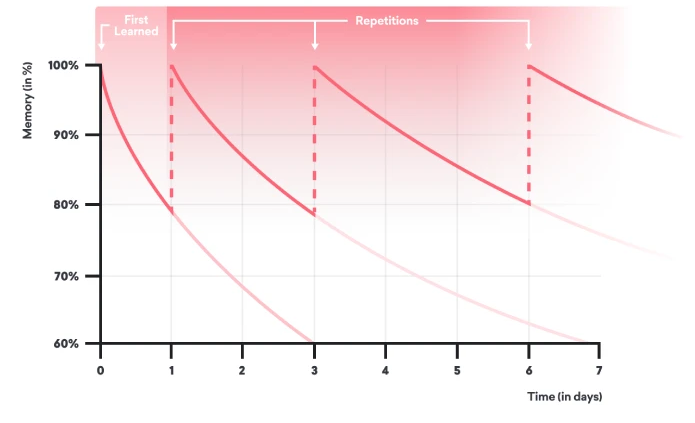
Coming full circle, however, it's important to stress that microlearning is fallible and must be deployed judiciously. To reiterate: any form of supplementary learning – or, indeed, education generally – can be grossly ineffectual if misapplied. Microlearning has several caveats. While it can streamline the learning experience for simple, granular topics, you can't use it to teach complex, multithreaded concepts. Furthermore, you can't overuse microlearning without drastically reducing its efficiency; because microlearning content tends to be dense, consuming too much at once could easily result in information overload. Think about it: if you're doing too much of it, the learning isn't "micro" at all!
Is Supplementary Learning the Future?
I don’t think that microlearning, or supplementary learning overall, intends to challenge traditional learning norms. However, it’s worth recognising that many of these techniques are likely to continue being seamlessly integrated into traditional learning in the foreseeable future – or even replacing it in certain contexts. For example, microlearning isn’t just for adolescents; it’s already becoming more common in the professional sphere. The benefits are too evident to ignore: examples such as transforming events like mandatory compliance seminars into portable short-form content is both time- and cost-efficient for both employees and employers. In fact, Interserv is working hard on projects paralleling the above – more on this soon!
Ultimately, the point is to be prudent. Supplementary learning shouldn’t be seen as just a gimmick, but educators often have fair reason to be cynical about its contemporary usage due to its misattribution. Supplementary learning has real potential if it’s curated carefully and precisely. At Interserv, we are committed to providing the best learning experience for our users, and supplementary learning continues to be one of our priorities in doing so. We’ll be releasing a lot more microlearning content in the coming weeks and months, so stay tuned!